September 15, 2026
Aipithelia
Epithelial is a membranous cellular tissue that covers a free surface or lines a tube or cavity in an animal body, serving to enclose and protect other parts, produce secretions and excretions, and function in assimilation.
We won’t repeat it again, or yes. The incorrectly labeled Artificial Intelligence (AI) is a language model (I recommend checking this blog for more information): a means of decoding human syntax into computer actions, as well as the reverse. The key measure of success for this interaction is human satisfaction with the results. There’s no other criteria. When Claude UI (user interface) says “AI can make mistakes,” it suggests that users may be dissatisfied with the supposed “intelligence” and that the product’s encounter fails to meet expectations—akin to labeling a phone “sometimes may not be a phone.”
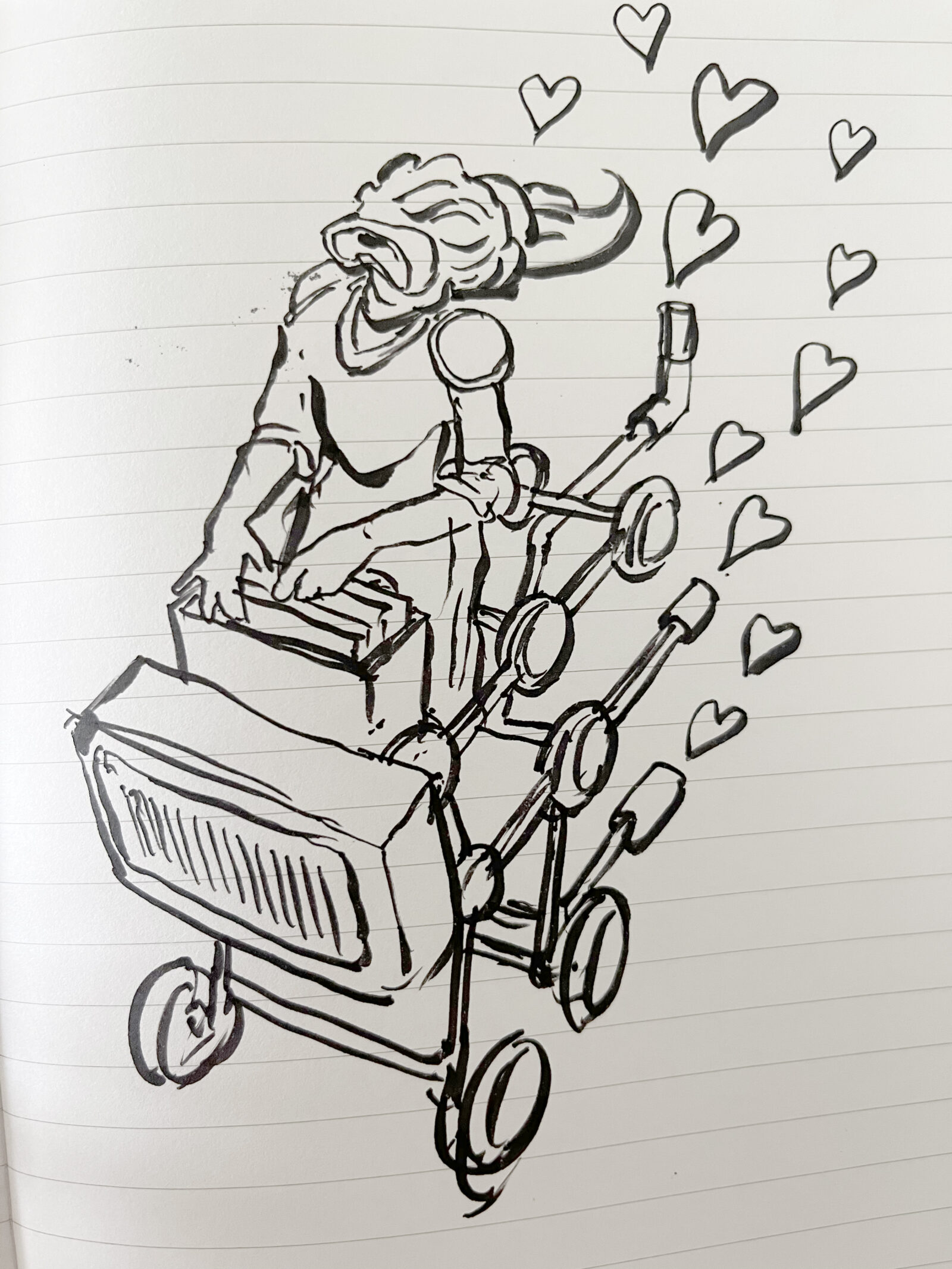
There is a significant gap between Claude’s statement in the UI and Antrophic CEO declarations in the press. The AI tool is not yet ready, nor does it possess intentions or will. Those who refer to their product as “AI” are promoting an exaggerated narrative about its intended uses and capabilities. Frankenstein-like creators have yet to administer lightning, but they already declare “it’s alive, it’s alive!” upon observing a well-built puppet on a laboratory bed. The last episode shows the scientist moving the puppet’s hand toward his neck and saying, “See? It’s so dangerous.”
A healthier approach for everyone would be to admit that language models represent a revolutionary step in helping the general public understand machines and translate commands, but they have nothing to do with actual intelligence. Intelligence remains a property that needs further understanding even within living beings, making it impossible to comprehend in artificial ones—unless one believes Sam Altman is a pitonise (a sorcerer) or some kind of spiritist.
If we call the innovation by its real name, we can begin to understand and analyze which properties will make it interesting and useful for human needs. Avoid using AI for personal, medical, psychological, or professional advice, particularly if you don’t possess enough expertise to evaluate its answers. As they say, “It can make mistakes,” better said as “it can gamble with your words until fulfilling marketing commitments.”
A language model serves as a membrane that allows your words to enter the machine world, separated -nowadays- by an interface defined and limited by hardware responsible for causing physical discomfort (e.g., straining necks like vultures on metro trains or causing eye strain under harsh lights). Language, however, inspires different ways of interacting than keyboards and complex devices.
-Once all this has been acknowledged, let us continue calling it AI :) . Life is full of contradictions, and semantics often depends on majorities, especially within morphemes. -
Beyond this membrane lies the infrastructure, encompassing all networks constructed by humanity, along with new, ultra-demanding systems we must consider to achieve freedom in using them. Those systems are needed by AI to work, but the design, distribution and consumption of those systems vary a lot depending on the objectives -again- of the humans that promote them. AI doesn’t need your phone, AI doesn’t need huge data centers, AI doesn’t need OpenAI or any specific company to survive or to grow. We can make AI -a language model- work within a small computer, and we’ll have enough to control our needs even more efficiently. Connect it to the different devices of your home and you’ll have a preliminary version of what the future can look like. But that’s not what we usually see in the media.
The propagation of falsehoods regarding AI may exceed those treated within marketing departments. Open-source and decentralized concepts are the traditional Big Tech’s nightmare, inevitably emerging alongside AI. Their tactic is to instill fear, urging people to surrender knowledge and control. “Leave us the task, it’s so dangerous” in order to maintain initiative, investments and market cap for usage. The truth is that none of the last 15 years of Big Tech software innovations are better handled by a centralized infraestructure. Paradoxically and not only, for safety reasons. It’s evident that digital technology is lower the learning curve and reducing the hardware needs, getting closer and closer to the end user, and, in a sense, getting to a point where the centralization is more an ideological bet sustained by capital, rather than a logical benefit for the user. While complex AI endeavours may still require the huge infrestures that want to be sold all over the world, the daily user life can be lived happily with a small pocket version of the AI and a well designed interface. Rather than a race to get AI solve the problems of the milenia -I think it’s very loable, don’t missunderstand me- I want to start a slow walk in solving the problems of the daily life and the layer of interaction between the humans and these new layer of technology. Do you go for a walk with me?
Aipithelial is the superficial layer of the agentic AI infrastructure that interacts with reality. It consists of structures, materials, and dynamics that enable AI to connect with the real world. By considering AI as a layer or portal rather than a device, we can understand and anticipate its capabilities.
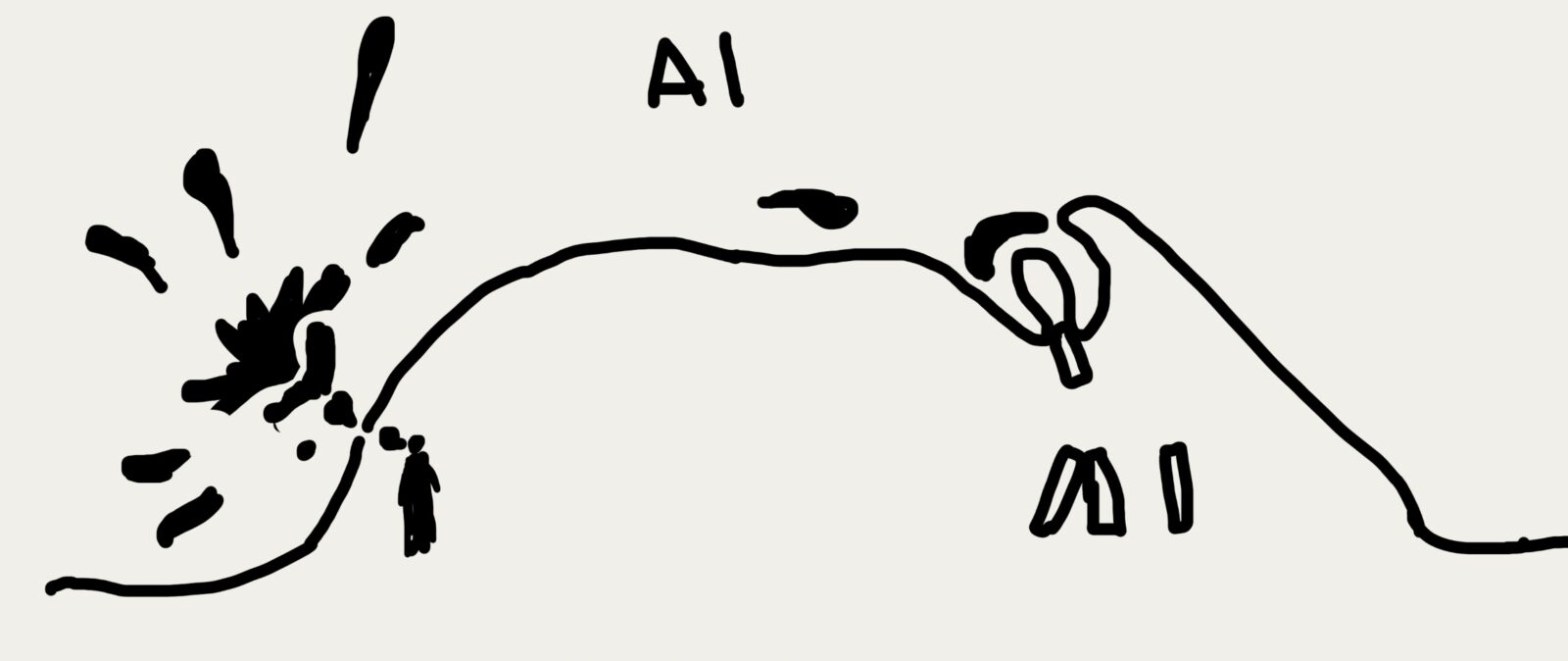
The Aipithelial membrane is a layer of words and waves that allows part of our being -voice, contact, motion- to pass into the virtual world through and appear elsewhere, like in a quantum jump, executing tasks. This technology’s true potential lies within the capabilities of the membrane —how adaptable it is (both in input and output), how sensitive to changes, and where it exists in space.– These questions require thought from perspectives beyond the utilitarian framework of traditional human tools (as they tend to be specific), but by delving into human nature’s deeper understanding. Cause AI serves humans -responding in first place to human actions- the answer to whether “AI can make mistakes” or not lies within human judgment. We need to look inside.

Let us think of real environments, such as houses filled with switches, appliances, electronic cars, street lights, fans, escalators, windows, cabins, parking lots, water systems, conversations, eye-to-eye exchanges, shop displays, payment devices… each with their instructions, devices and ways of interaction. After applying AI, since they’ll need to pass to the same layer of interaction, they’ll tend to share more properties, and generate similar inputs and outputs. With time, there’s no need for complexity in the inputs or output, there won’t be need for washing machine buttons, or specific place for mailbox, maybe a TV is reduce to light emission, or a concrete place to connect the console, there will be just one connection -the voice / text – and one output . The inner spaces bahind that layer will become a living thermomix where everything will be proccessed, where the mechanism and complexity could be acccessed in case of failure, but won’t need to be intervened in daily life.
The first investment attempt has been to create Humanoids: “If our world is designed for humans, let’s make the output layer humanoid as well”. That’s a straightforward idea, but overcoming the challenges posed by this encounter may prove too difficult using current technology. Yes, we can manufacture robots, but living beings’ efficiency and complexity cannot be replicated with chips and actuators. It appears that the teams responsible for developing these applications lack imagination rather than implementing optimal AI interfaces.
AI memba